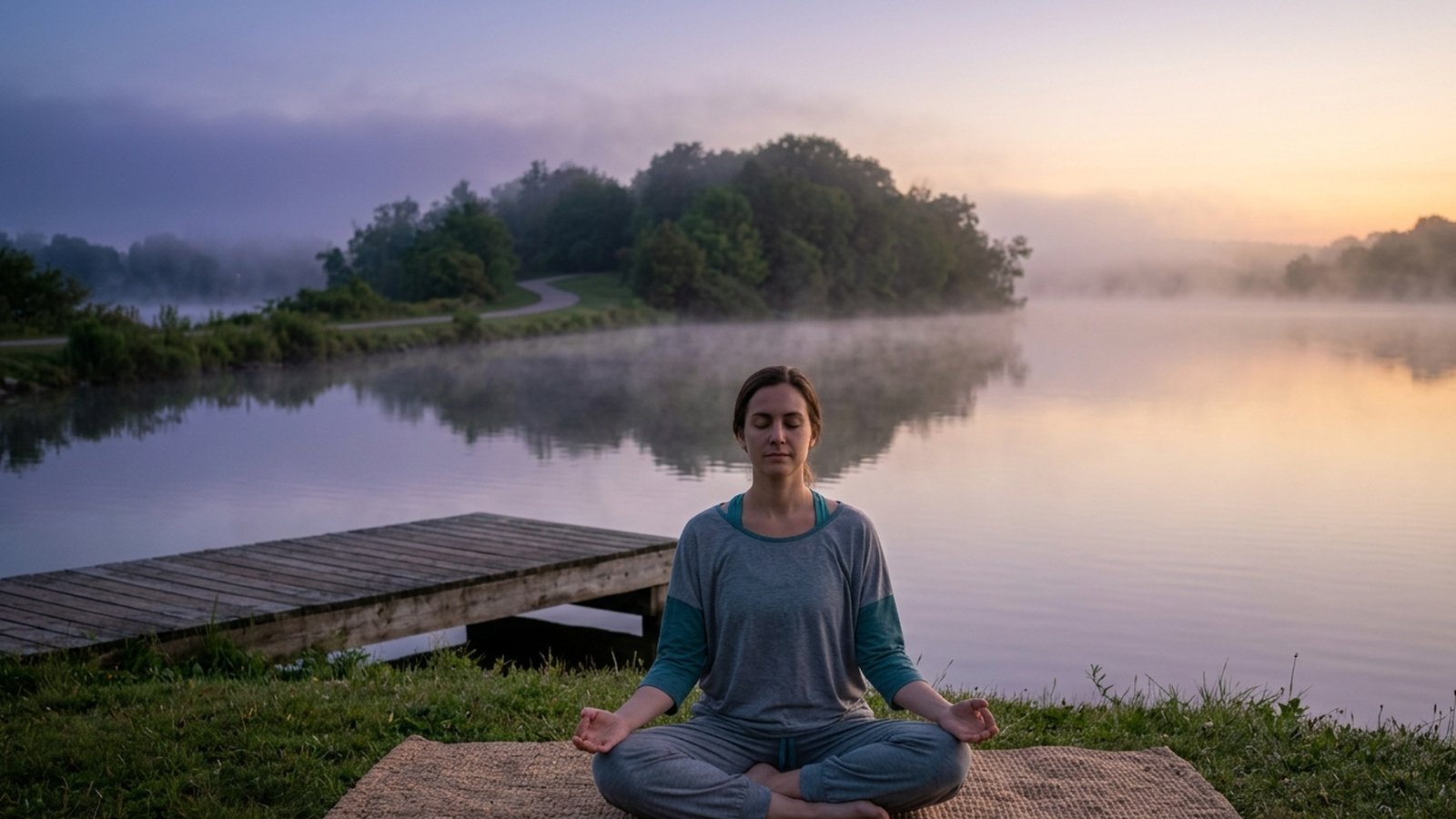
A meta-analysis of 47 randomised trials in JAMA Internal Medicine concluded that mindfulness meditation programmes have moderate evidence of improved anxiety, depression, and pain — with effects comparable to antidepressants.
💡 Why this matters
Mindfulness meditation has been shown in dozens of randomised trials to measurably reduce anxiety, depression, and chronic pain. Eight weeks of practice produces effects on par with first-line pharmaceutical treatment for these conditions.
What mindfulness actually means
Mindfulness, in the clinical-trial sense, is a structured practice of paying attention to present experience non-judgmentally. The two most-tested protocols are Mindfulness-Based Stress Reduction (MBSR), an 8-week program, and Mindfulness-Based Cognitive Therapy (MBCT). Both are now offered through major hospital systems and Canadian universities.
What the JAMA meta-analysis found
Goyal and colleagues reviewed 47 RCTs covering 3,515 participants. Mindfulness programmes showed moderate evidence of improved anxiety, depression, and pain, with effect sizes comparable to those of antidepressants for the same conditions (Goyal et al., 2014).
What it does to the brain
MRI studies show consistent changes in fit meditators: increased gray matter density in the hippocampus, prefrontal cortex, and insula; decreased reactivity in the amygdala. These are the regions involved in attention, emotion regulation, and self-awareness.
How to start in 10 minutes
Set a timer for 10 minutes. Sit comfortably, eyes closed or softly downcast. Breathe naturally — do not force the rhythm. Notice the sensation of breath at the nostrils. When attention wanders (it will, constantly), gently return to the breath. That noticing-and-returning is the practice. Apps like Calm, Headspace, and Insight Timer all offer guided sessions if you want structure.
Breathwork as an entry point
For people who find seated meditation difficult, slow nasal breathing at ~6 breaths/min produces measurable parasympathetic activation within minutes — lower heart rate, lower blood pressure, lower perceived stress (Russo et al., 2017).
Mindfulness meditation programmes had moderate evidence of improved anxiety, depression, and pain, and low evidence of improved stress/distress and mental health-related quality of life.Source: Goyal et al. (2014), JAMA Internal Medicine.
By the numbers
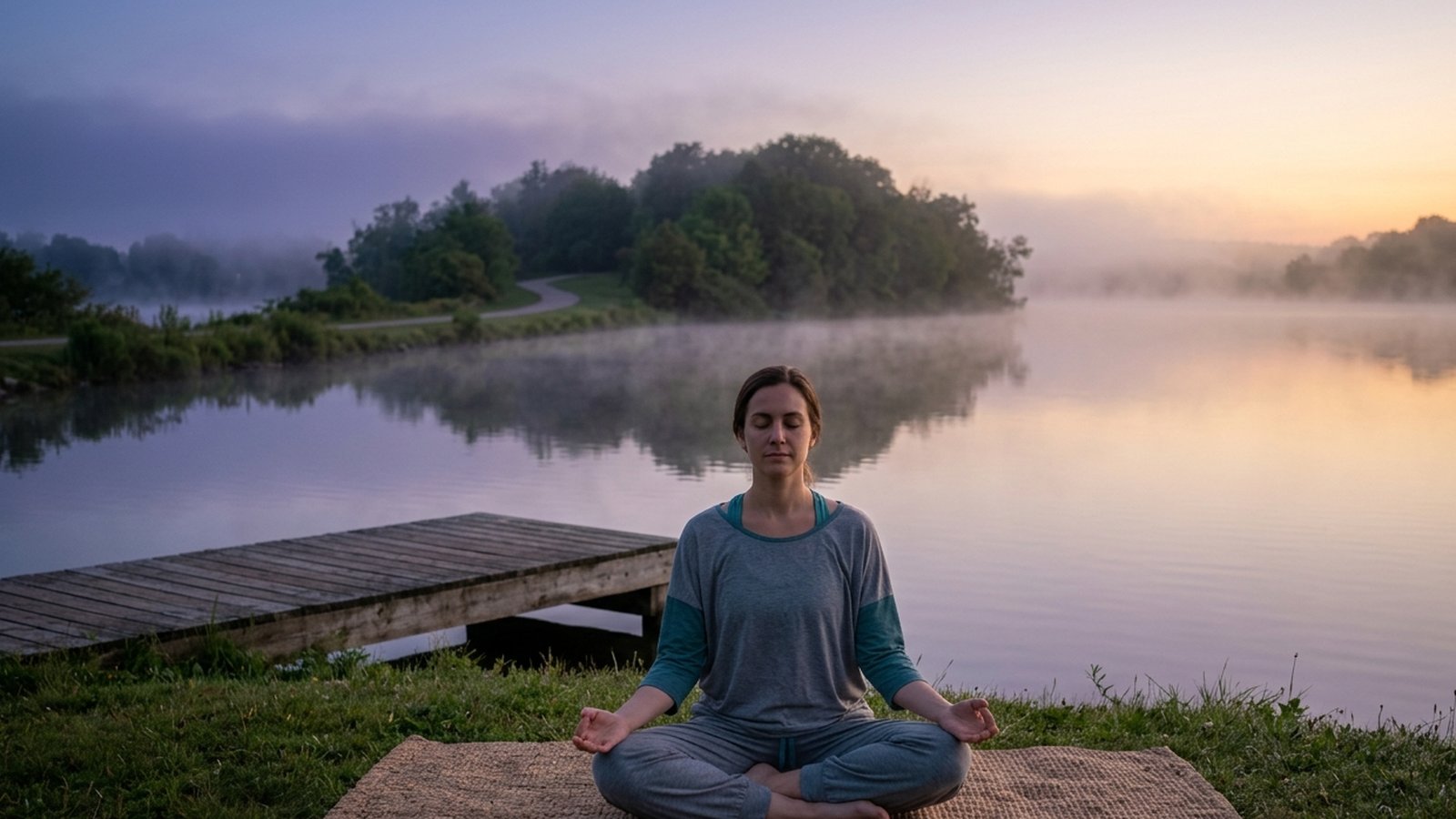
The practice is not silencing thought. It is noticing it without grabbing on.
References
- Goyal, M., Singh, S., Sibinga, E. M., et al. (2014). Meditation programs for psychological stress and well-being. JAMA Internal Medicine, 174(3), 357–368. View source →
- Russo, M. A., Santarelli, D. M., & O'Rourke, D. (2017). The physiological effects of slow breathing in the healthy human. Breathe, 13(4), 298–309. View source →