Resistance training reduces falls, frailty, and all-cause mortality in older adults. It is, on a per-person-saved basis, one of the most under-prescribed medicines in Canadian healthcare.
💡 Why this matters
Older adults who train resistance two to three times per week measurably reduce their risk of falls, fractures, and frailty. The Cochrane review of 121 trials confirms the effect across the full spectrum of starting fitness — from active 60s to nursing-home residents in their 90s.
Why it matters more after 60
Falls are the leading cause of injury death in adults over 65 in Canada. Most are not random — they are the predictable result of lost lower-body strength, balance, and reaction time. The single most-supported intervention is progressive resistance training (Liu & Latham, 2009).
What the Cochrane review showed
121 trials, 6,700+ participants, mean age 64–96. Progressive resistance training improved physical function and gait speed; reduced chair-rise time; and produced self-reported quality-of-life gains. The effect held across all age subgroups, including those over 80.
Bone density and fracture risk
Postmenopausal women are at particular risk for osteoporotic fracture. The 2020 systematic review by Kemmler et al. found high-intensity resistance training was the most consistent non-pharmaceutical intervention for maintaining and even improving bone mineral density (Kemmler et al., 2020).
A typical senior-friendly programme
- 2–3 days/week, supervised initially
- Compound movements: squat-pattern, hinge-pattern, push, pull, carry
- 8–12 reps per set, 2–3 sets, RPE 7–8
- Balance work at end (single-leg holds, tandem stance)
- Mobility work daily
- Protein: 1.2–1.5 g/kg/day (PROT-AGE)
It is never too late
The classic Frontera/Fiatarone work showed nursing-home residents over 90 made measurable strength gains in 10 weeks (Fiatarone et al., 1994). The body adapts to load at every age.
Progressive resistance strength training improves physical function, gait speed, chair-rise time, and self-reported quality of life across the spectrum of older-adult populations.Source: Liu & Latham (2009), Cochrane Review of 121 trials.
By the numbers
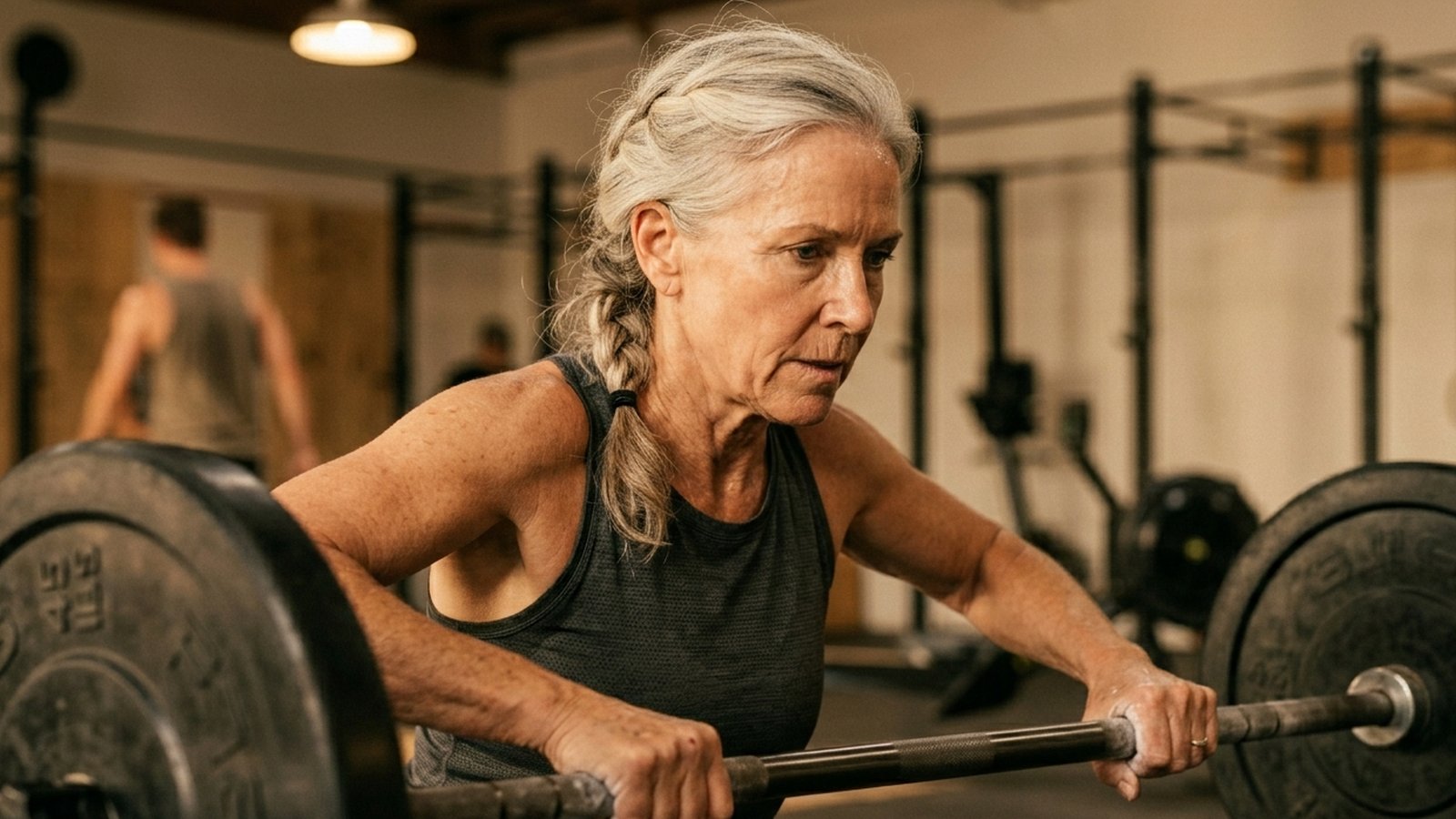
The strongest evidence is for supervised, progressive training. Form quality matters more than absolute load in this age group.
References
- Liu, C. J., & Latham, N. K. (2009). Progressive resistance strength training for improving physical function in older adults. Cochrane Database, (3), CD002759. View source →
- Kemmler, W., et al. (2020). Effects of different types of exercise on bone mineral density in postmenopausal women. Osteoporosis International. View source →
- Fiatarone, M. A., et al. (1994). Exercise training and nutritional supplementation for physical frailty in very elderly people. NEJM, 330(25), 1769–1775. View source →