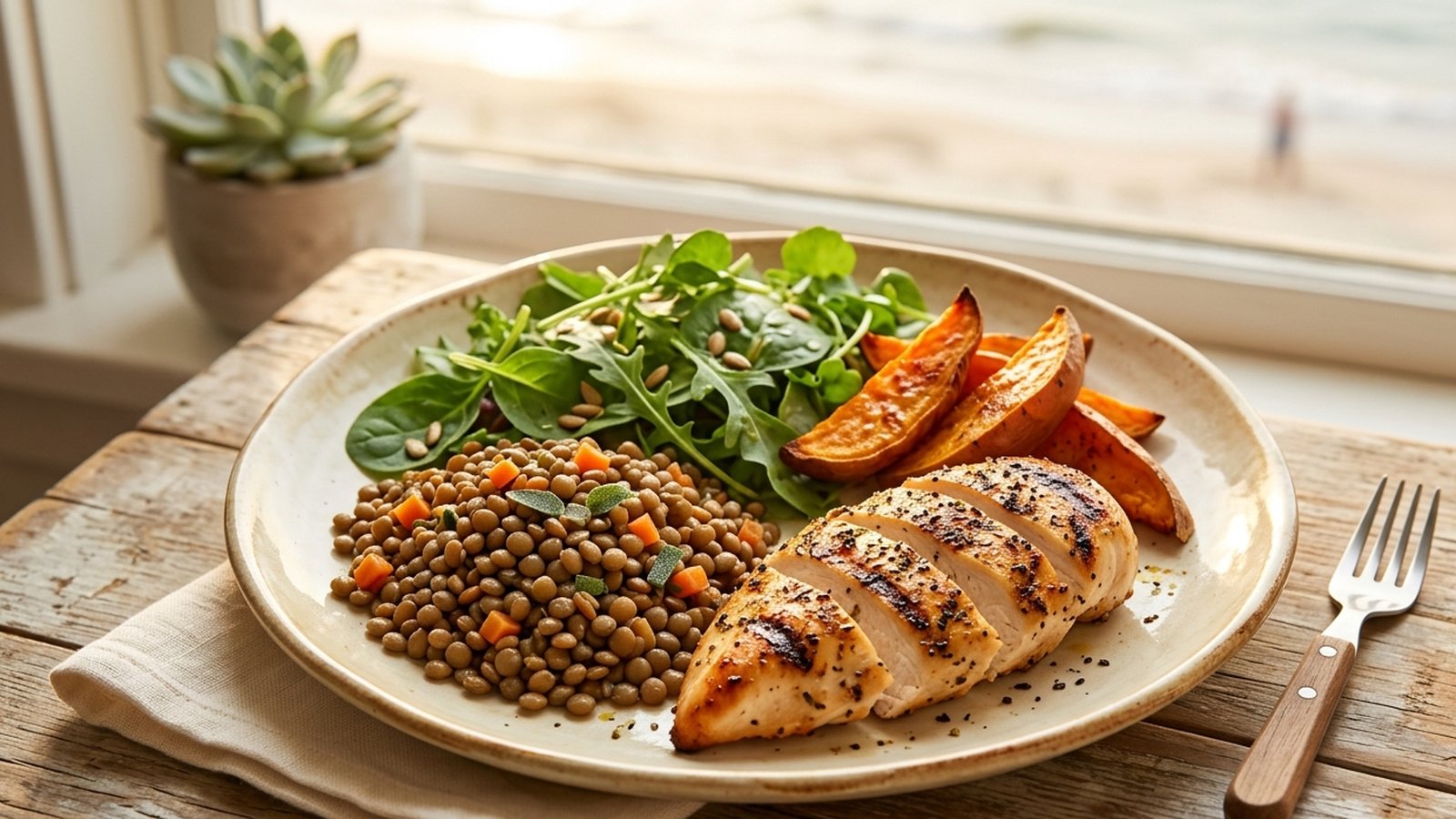
For decades, the standard nutritional advice for protein intake has been anchored to a single number: 0.8 grams per kilogram of body weight. This is the Recommended Dietary Allowance (RDA), a figure designed to prevent deficiency in 98% of the healthy population. However, modern kinesiologists and nutritional scientists are increasingly arguing that for active adults, "preventing deficiency" is a low bar.
The Maintenance vs. Optimization Gap
If you are sedentary, 0.8g/kg is enough to keep your body from breaking down its own muscle tissue. But if you are training — whether lifting weights, running on the Wasaga boardwalk, or attending a HIIT class — your requirements shift. Research consistently shows that to optimize muscle protein synthesis (the process of repairing and building muscle), a range of 1.2 to 2.2 grams per kilogram is more appropriate.
💡 Quick Take
- Sedentary: 0.8g/kg is the minimum.
- Active Adults: 1.2–1.6g/kg supports recovery.
- Strength Athletes: 1.6–2.2g/kg optimizes gains.
- Aging (65+): Higher protein (1.2g/kg+) is critical to combat sarcopenia.
Timing and Quality
It’s not just about the total daily number. Your body can only process a certain amount of protein for muscle synthesis in a single sitting — typically around 20–40 grams depending on your size. Spreading your intake across four or five meals is generally more effective than "saving" it all for a massive steak dinner.
Quality matters too. Complete proteins — those containing all nine essential amino acids — are found in animal products like eggs, Greek yogurt, and lean meats. For plant-based athletes, combining sources (like beans and rice) or choosing high-quality isolates like soy or pea protein is essential for meeting these requirements.
"The RDA is a floor, not a ceiling. For anyone looking to age well and maintain functional strength, protein is the most critical lever you can pull."
The Sarcopenia Connection
As we age, our bodies become less efficient at processing protein (a condition called anabolic resistance). This makes high-quality protein even more important for seniors. To maintain bone density and prevent muscle loss, older adults should aim for the higher end of the spectrum, paired with resistance training.