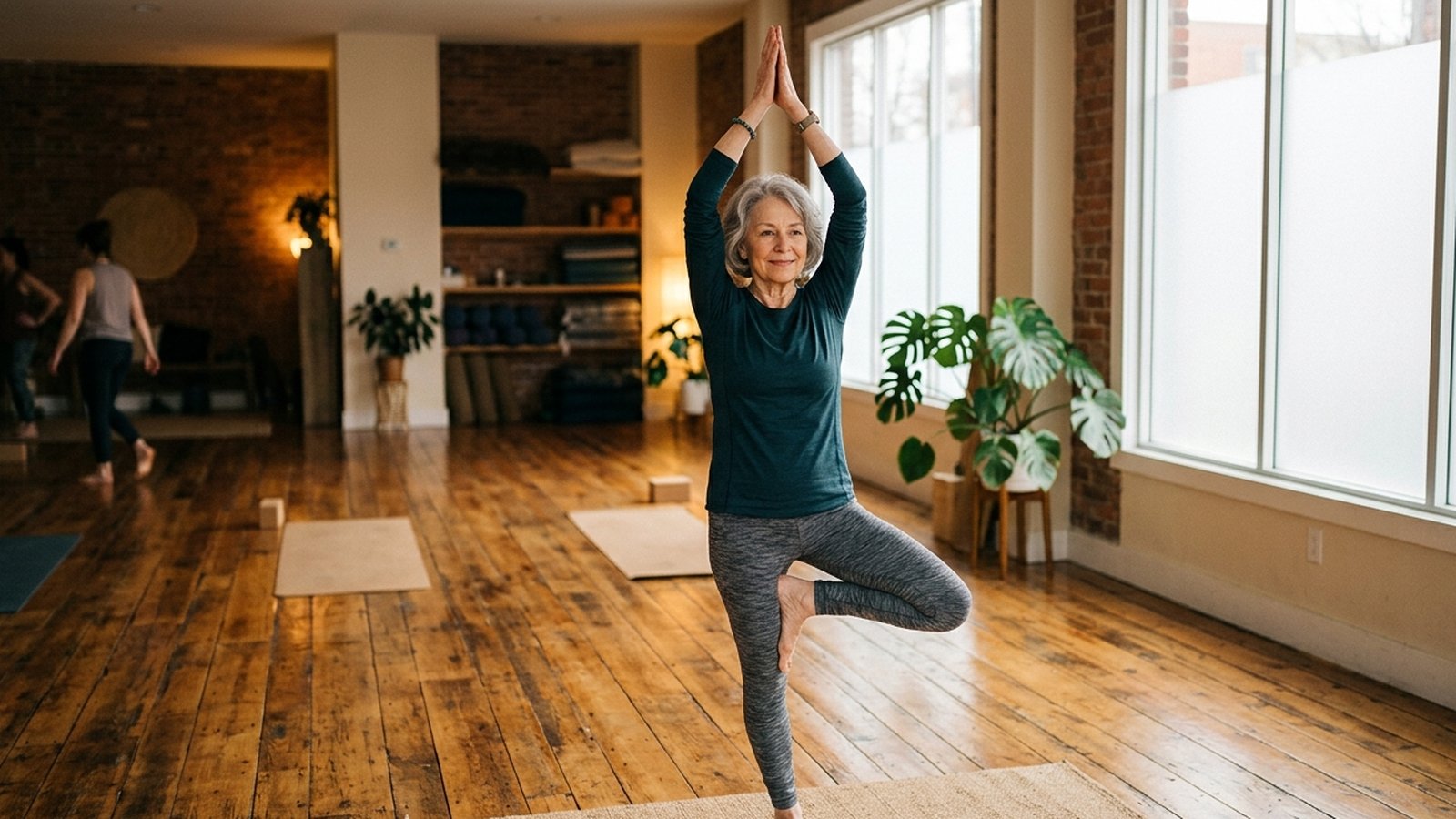
Flexibility is how far a joint can passively move; mobility is how far it can actively move under control. The distinction matters more every decade — and the simple drills that maintain it take fifteen minutes.
💡 Why this matters
Mobility — active joint range of motion — declines steadily with age unless deliberately maintained. Daily dynamic mobility work measurably reduces injury risk and keeps everyday movements pain-free into the 70s and beyond.
Flexibility vs. mobility
Flexibility is the passive end-range of a joint. Mobility is the same range, accessible actively under your own muscle control. A gymnast pulled into the splits has flexibility. One who can hold the splits unassisted has mobility. For everyday life, mobility is what matters.
What the research shows
The 2016 systematic review by Behm et al. concluded regular dynamic mobility work reliably increases active joint ROM, with measurable gains in 4 weeks (Behm et al., 2016). Pre-training warm-up evidence is stronger still: comprehensive warm-up programmes reduce strain and overuse injuries by approximately 28% (Soligard et al., 2008).
Why mobility declines
Connective tissue stiffens with age, and most adults stop using their full range. Sit at a desk for 30 years and your hip flexors shorten; your spine loses rotational range; your ankles lose dorsiflexion. The body honours the principle of "use it or lose it." The fix is small, daily, and unimpressive in any single session — but cumulatively powerful.
A 10-minute daily routine
- Cat-cow — 10 reps
- Thoracic rotations — 8 each side
- Hip circles in 90/90 — 8 each side
- World's greatest stretch — 5 each side
- Wall slides — 10 reps
- Ankle dorsiflexion against wall — 8 each side
Static stretching — when not
Static stretching held >60 seconds before a power workout slightly reduces strength for 30–60 minutes. Save long static holds for after training (Behm & Chaouachi, 2018).
Range-of-motion work is one of the most reliable, lowest-risk interventions in all of exercise medicine — and one of the most underused.Source: Behm et al. (2016), Applied Physiology, Nutrition, and Metabolism.
By the numbers
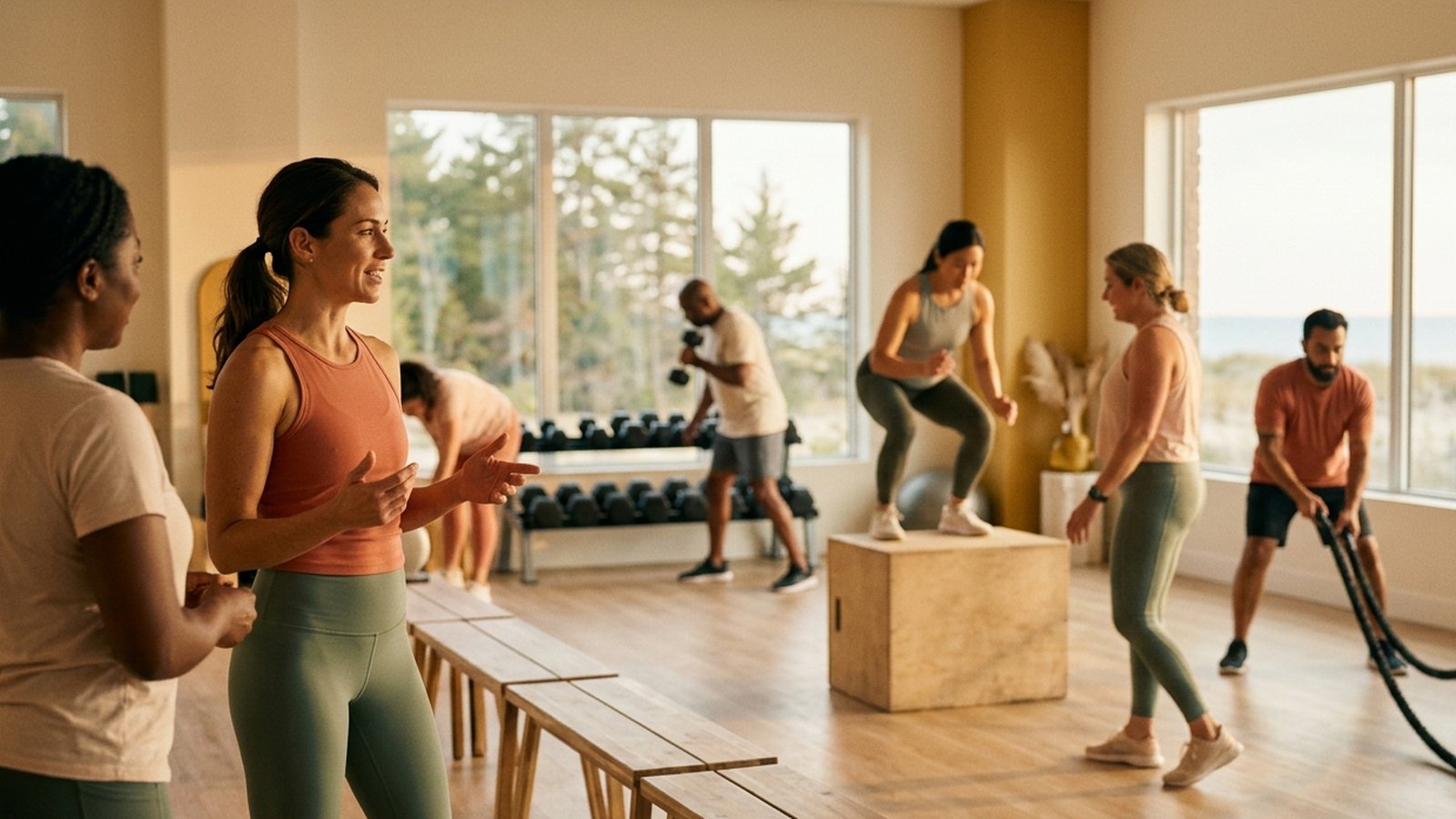
The deep squat is a useful self-test. If you cannot sit in one comfortably, your ankles, hips, or spine are losing range you can win back.
References
- Behm, D. G., Blazevich, A. J., Kay, A. D., & McHugh, M. (2016). Acute effects of muscle stretching on physical performance, range of motion, and injury incidence. Applied Physiology, Nutrition, and Metabolism, 41(1), 1–11. View source →
- Behm, D. G., & Chaouachi, A. (2018). A review of the acute effects of static and dynamic stretching on performance. View source →
- Soligard, T., Myklebust, G., et al. (2008). Comprehensive warm-up programme to prevent injuries. BMJ, 337, a2469. View source →