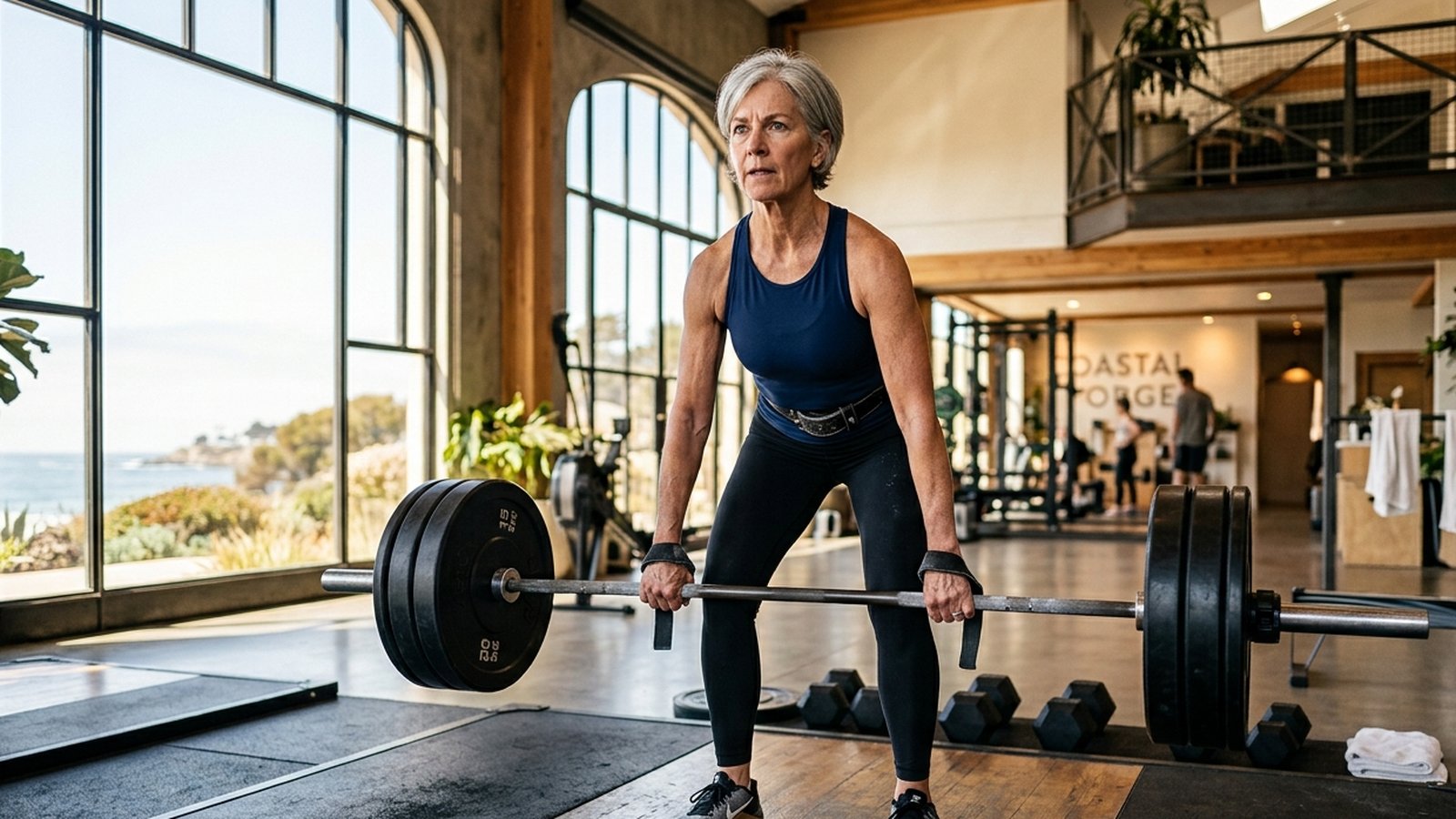
Two minutes of hard work, three times a week. According to a remarkable body of research from McMaster University and beyond, that small dose of all-out effort can rival 90 to 120 minutes of moderate jogging in its effect on your heart and metabolism — and the reason has less to do with calories than with what happens deep inside your cells.
💡 Why this matters
High-intensity interval training is the most-studied exercise protocol of the past two decades. Short, hard intervals improve cardiovascular fitness, blood-sugar control, and body composition more efficiently than steady cardio — useful for anyone short on time. Two to three sessions a week, properly programmed, is enough to see measurable change.
What HIIT actually is
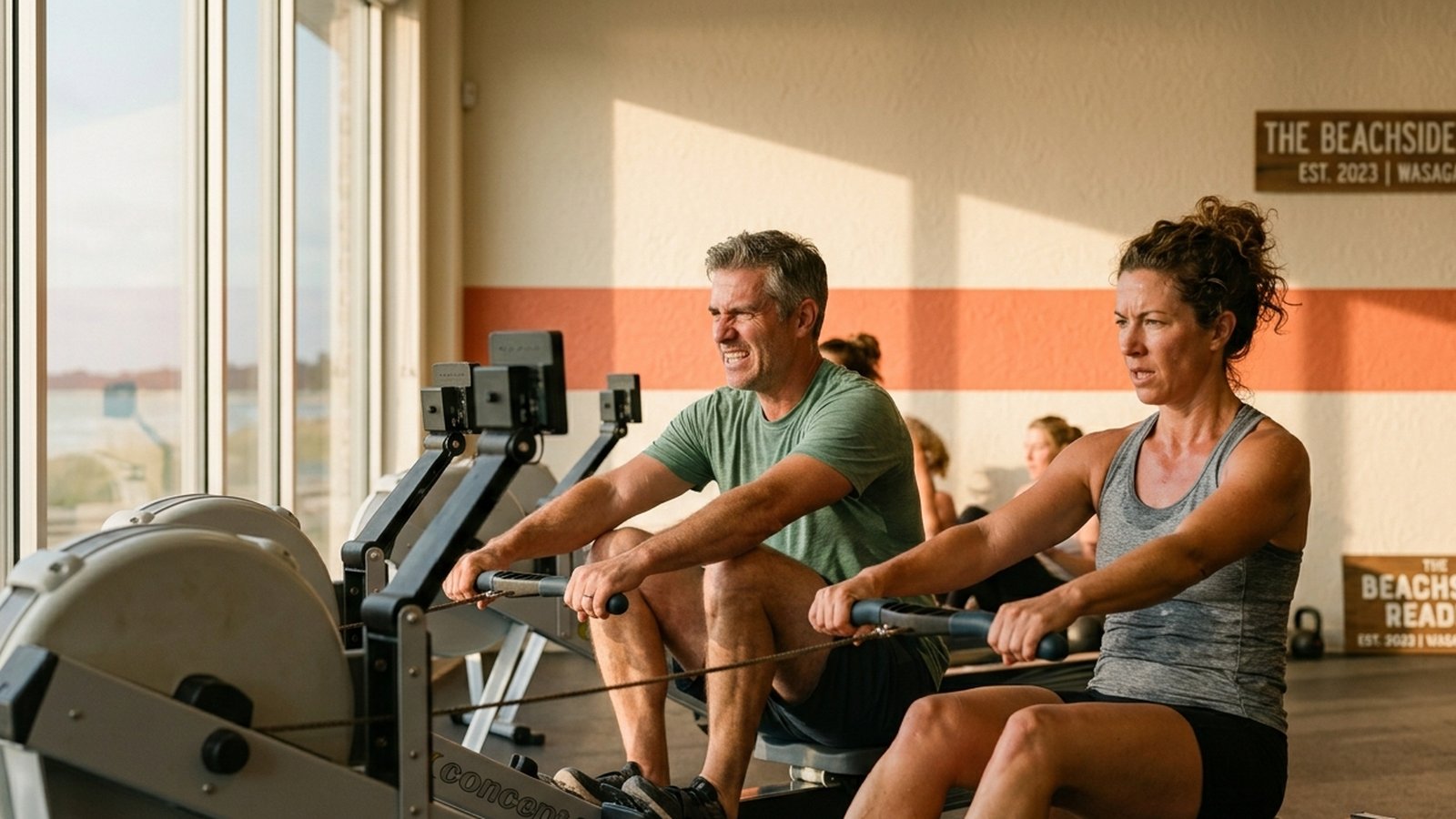
High-intensity interval training, or HIIT, alternates short bouts of near-maximal effort with brief recovery periods. A typical class structure might look like this: row hard for 30 seconds, walk for 30 seconds, repeat for 8 to 10 rounds. Or 4 minutes near your peak heart rate, 3 minutes easy, four times. There are dozens of formats. The thread connecting them all is the contrast between work and recovery.
What surprises most people is how little time it takes for measurable change to appear, and how broad that change is. The body adapts to repeated, intense stress in remarkable ways — building a more efficient cardiovascular system, more powerful muscle cells, and a metabolism better at handling sugar (Gibala et al., 2012).
HIIT vs. Steady-State Cardio — Time-to-Equal-Adaptation
Source: Gibala et al., 2012, Journal of Physiology. Approximate weekly time required for equivalent VO₂max adaptation in healthy adults.
It rebuilds your cardiovascular system fast
The most-cited researcher in this field is Dr. Martin Gibala, professor of kinesiology at McMaster University in Hamilton, Ontario. His 2012 review in The Journal of Physiology pooled the evidence on low-volume HIIT and concluded that intervals can match or exceed the cardiovascular adaptations of moderate continuous exercise — in a fraction of the time.
The most important outcome is improvement in VO₂max — the maximum amount of oxygen your body can use during exercise. VO₂max is the single best predictor of long-term cardiovascular health and one of the strongest predictors of all-cause mortality. People in the highest VO₂max quintile live materially longer than those in the lowest, even after controlling for age, sex, and traditional risk factors.
Inside the lab. Two decades of work at McMaster's kinesiology department have made HIIT one of the most-studied exercise protocols in the world.
Two minutes of all-out interval training, performed three times a week, can produce similar adaptations to 90 to 120 minutes of moderate, continuous training.Dr. Martin Gibala — Professor of Kinesiology, McMaster University; author of The One-Minute Workout
It changes your metabolism — visibly
The metabolic effects are where the data gets compelling, particularly for people worried about prediabetes, type 2 diabetes, or stubborn weight loss. A 2011 study by Dr. Jonathan Little and colleagues found that insulin sensitivity — your body's ability to manage blood sugar — improved measurably after as little as two weeks of HIIT in patients with type 2 diabetes (Little et al., 2011).
That same outcome typically takes months on traditional cardio, if it happens at all. The mechanism is partly mitochondrial: HIIT directly stimulates your muscle cells to build more "energy factories," which makes them better at pulling sugar out of the bloodstream.
A 2017 systematic review and meta-analysis by Wewege and colleagues, examining body-composition outcomes specifically, found HIIT produced about 28.5% greater fat loss than moderate continuous training in overweight and obese adults — and HIIT preferentially targeted abdominal (visceral) fat, the most metabolically dangerous fat tissue in the body (Wewege et al., 2017).
By the numbers
At the cellular level — bigger engines
Inside your muscle cells are tiny structures called mitochondria — the "power plants" that convert oxygen and fuel into usable energy. HIIT directly stimulates the production of more mitochondria, and bigger ones. A landmark study by Burgomaster and colleagues (2008) showed that just two weeks of sprint-interval training produced mitochondrial adaptations comparable to traditional endurance training — in roughly one-tenth the total exercise time (Burgomaster et al., 2008).
That matters because mitochondrial density is what allows you to recover faster between efforts, sustain higher intensities for longer, and — at the population level — is increasingly implicated in metabolic health and longevity. The "free radical" damage that ages our cells is partly a mitochondrial story.
How to do HIIT well
The published literature is consistent on three principles:
- The "high" part has to actually be high. If you can comfortably hold a conversation during the work intervals, you're doing intervals — not HIIT. Use the talk test or a heart rate monitor; aim for 85–95% of your maximum heart rate during work, or "all-out" for short bouts.
- Don't do it every day. The published protocols are 2–3 sessions per week. The body adapts during recovery; daily HIIT defeats the purpose and pushes most people toward overtraining symptoms.
- Warm up properly. The fastest way to injure yourself is to skip the warm-up and go straight into a 10/10 effort. Five to ten minutes of progressive intensity protects your tendons, your blood pressure, and your spine.
Who should be cautious — or skip it
HIIT is high-stress by design. The American College of Sports Medicine recommends a medical clearance conversation before starting if you have known cardiovascular disease, uncontrolled high blood pressure, or unstable angina; if you've had recent cardiac events; or if you're sedentary and over 65 (ACSM, 2021).
If your physician green-lights it, our coaches scale every interval to your starting point. The principle of progressive overload still applies — you don't go from zero to all-out in your first week. You build into it, gradually, over weeks.
The bottom line
If you have 30 minutes and you want the highest cardiovascular and metabolic return on that time investment, properly-programmed HIIT is among the most evidence-supported choices available to you. It is not magic — it is, however, one of the rare cases where "less time, more effect" turns out to be quietly true at the cellular level (WHO, 2020).
If you'd like to try a coach-led HIIT class without committing to anything, your first class is on us. Bring water, comfortable shoes, and an open mind. Book your free class →
References
- American College of Sports Medicine. (2021). ACSM's guidelines for exercise testing and prescription (11th ed.). Wolters Kluwer. acsm.org
- Burgomaster, K. A., Howarth, K. R., Phillips, S. M., Rakobowchuk, M., MacDonald, M. J., McGee, S. L., & Gibala, M. J. (2008). Similar metabolic adaptations during exercise after low volume sprint interval and traditional endurance training in humans. The Journal of Physiology, 586(1), 151–160. https://doi.org/10.1113/jphysiol.2007.142109
- Gibala, M. J., Little, J. P., MacDonald, M. J., & Hawley, J. A. (2012). Physiological adaptations to low-volume, high-intensity interval training in health and disease. The Journal of Physiology, 590(5), 1077–1084. https://doi.org/10.1113/jphysiol.2011.224725
- Gibala, M. J., & Hawley, J. A. (2017). Sprinting toward fitness. Cell Metabolism, 25(5), 988–990. https://doi.org/10.1016/j.cmet.2017.04.030
- Little, J. P., Gillen, J. B., Percival, M. E., Safdar, A., Tarnopolsky, M. A., Punthakee, Z., Jung, M. E., & Gibala, M. J. (2011). Low-volume high-intensity interval training reduces hyperglycemia and increases muscle mitochondrial capacity in patients with type 2 diabetes. Journal of Applied Physiology, 111(6), 1554–1560. https://doi.org/10.1152/japplphysiol.00921.2011
- Wewege, M., van den Berg, R., Ward, R. E., & Keech, A. (2017). The effects of high-intensity interval training vs. moderate-intensity continuous training on body composition in overweight and obese adults: A systematic review and meta-analysis. Obesity Reviews, 18(6), 635–646. https://doi.org/10.1111/obr.12532
- World Health Organization. (2020). WHO guidelines on physical activity and sedentary behaviour. Geneva: WHO. https://www.who.int/publications/i/item/9789240015128