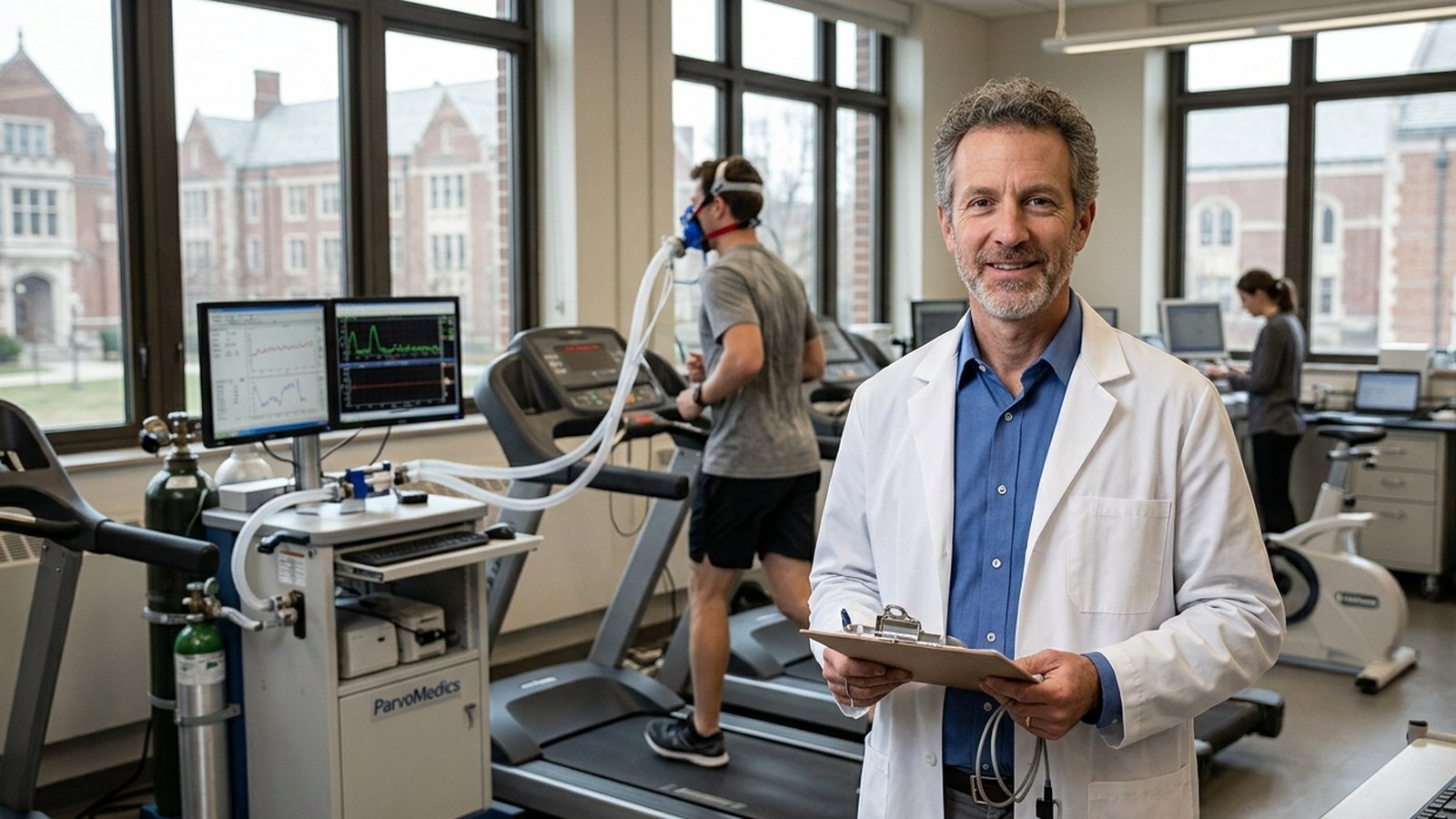
Most exercise-related medical events are preceded by warning signs. The American Heart Association has spent decades cataloguing them. This is the short, evidence-based list every adult who exercises should know.
💡 Why this matters
Most exercise-related cardiovascular events are preceded by recognisable warning signs. Knowing what to stop for — and when to call 911 vs. when to book a doctor's visit within a week — is one of the highest-leverage pieces of safety knowledge in fitness.
Stop and call 911
- Chest pain, pressure, or tightness — especially radiating to arm, jaw, or back
- Sudden severe shortness of breath disproportionate to effort
- Fainting, near-fainting, or unexplained dizziness
- Sudden severe headache ("worst headache of my life")
- Sudden weakness, numbness, vision changes, slurred speech — possible stroke (FAST: face, arm, speech, time)
- Irregular pounding heartbeat that won't slow with rest
- Confusion, hot dry skin, very high body temperature — possible heat stroke
- Loud "pop" with sudden swelling/instability — possible tendon/ligament rupture
- Brown / cola-coloured urine after intense exercise — possible rhabdomyolysis
See a doctor (non-emergency) within 1–2 weeks
- Joint pain that does not resolve with rest in 7 days
- Numbness, tingling, pins-and-needles in a limb
- Persistent fatigue, sleep disruption, or unexplained weight loss
- New lump, swelling, or area of localised redness
- Recurring injury at the same site
- Loss of menstrual cycle (women), morning erections (men) — both clinical biomarkers
The AHA evidence base
Thompson and colleagues (2007) reviewed every available cohort study on exercise-related cardiac events. Their finding: SCD during exercise is rare in absolute terms (~1 in 565,000 person-hours of vigorous activity in middle-aged adults), but warning symptoms typically precede the event in those who have one (Thompson et al., 2007).
Pre-participation screening
The CSEP Physical Activity Readiness Questionnaire (PAR-Q+) is the standard screening tool used across Canada. It takes 3 minutes, is free, and identifies the small fraction of adults who should consult a physician before starting (Warburton et al., 2011).
What our coaches do
Every Beachside coach is trained in basic first aid and CPR. We have an AED on-site. New members complete a brief health screening before their first class.
Sudden cardiac death during exercise is rare but typically preceded by warning symptoms. Investigate them.Source: Thompson et al. (2007), Circulation, AHA Scientific Statement.
By the numbers

Every public space — including the gym — should have an AED. Know where it is.
References
- Thompson, P. D., Franklin, B. A., Balady, G. J., et al. (2007). Exercise and acute cardiovascular events. Circulation, 115(17), 2358–2368. View source →
- Warburton, D. E. R., Jamnik, V. K., Bredin, S. S. D., & Gledhill, N. (2011). The Physical Activity Readiness Questionnaire for Everyone (PAR-Q+). Health Fitness Journal of Canada. View source →
- American Heart Association. (2024). Hands-Only CPR. View source →