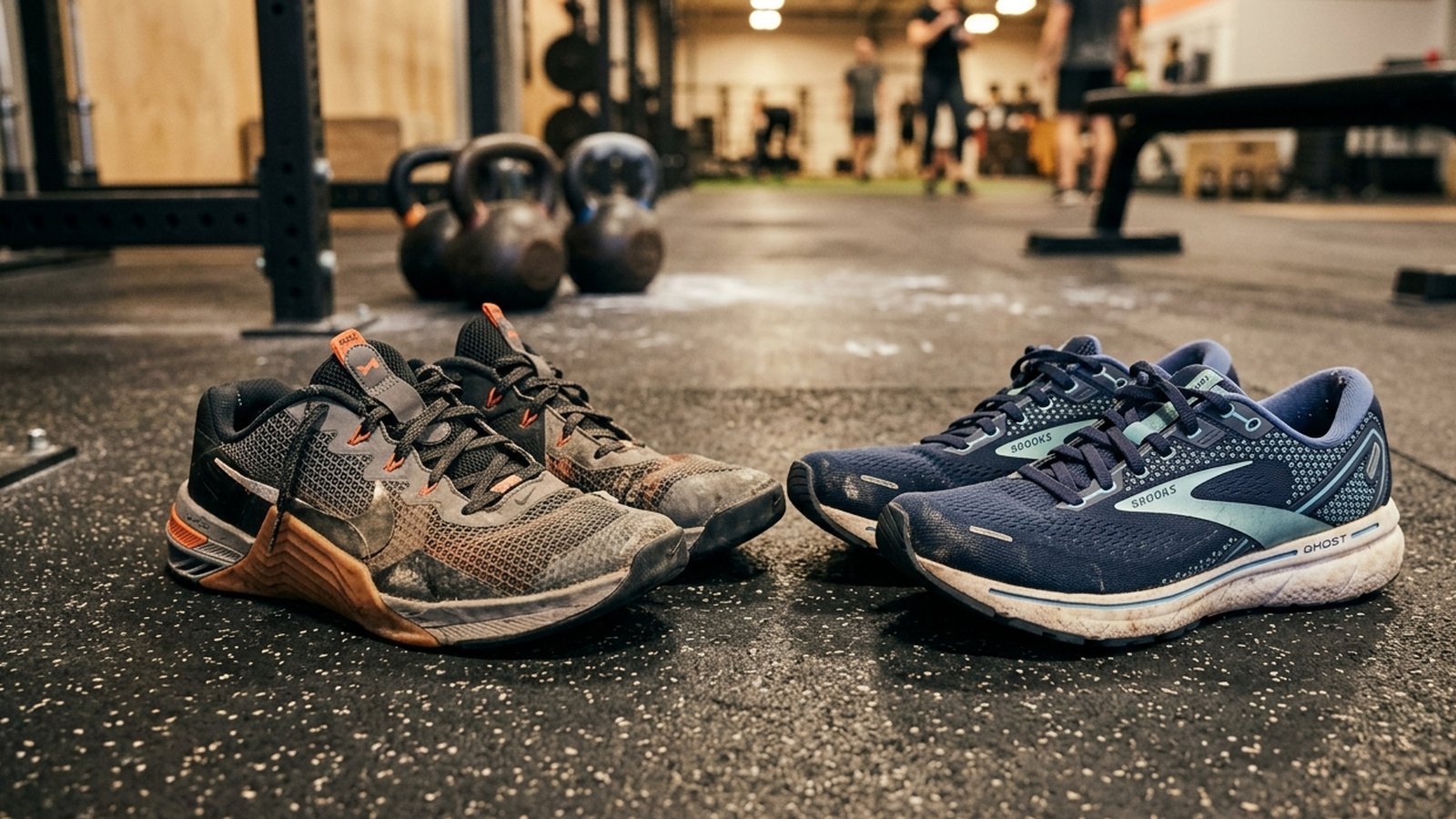
The single most-overlooked equipment decision in fitness. Cross-trainers for the gym, running shoes for the road, lifting shoes for heavy squats. The British Journal of Sports Medicine has called the shoe-prescription industry largely unsupported by evidence.
💡 Why this matters
There is no perfect shoe for everything. Different activities need different shoes. Comfort and a good fit are more important than fancy technology. The best shoe is the one that feels natural and supports the specific movement you're doing.
Different activities, different shoes
- Running: well-cushioned running shoes (rotate 2 pairs to extend life)
- Strength training: flat, stable sole — Chuck Taylors, lifting shoes, or hard-soled cross-trainers
- HIIT / Circuit / Hyrox: stable cross-trainer with light cushion and lateral support
- Walking: well-cushioned walking shoes or running shoes
- Yoga / Pilates: barefoot or grip socks
Why a running shoe is wrong for the gym
Modern running shoes have soft, compressible foam under the heel. Stand on top of that to deadlift or squat heavy and the foam compresses unevenly, destabilising the lift. The bigger the load, the worse this gets. A flat, stable sole transfers force directly into the floor — the way the lift was designed.
What the research actually says about running shoes
The 2009 BJSM systematic review by Richards and colleagues found no good evidence that selecting shoes based on foot posture (pronation, supination, "neutral") reduces injury risk in distance runners (Richards et al., 2009). Comfort and fit predict injury better than any "stability" feature.
When to replace running shoes
Most running shoes lose their cushioning effectiveness around 500–800 km (300–500 miles) of use. If you run 30 km/week, that's 4–6 months. Shoes that no longer feel "springy," show wrinkled compressed midsoles, or wear unevenly are due. Strength shoes last much longer — flat soles don't compress.
Practical buying tips
- Try them in person where possible. Online sizing is unreliable across brands.
- Shop late in the day — feet swell about half a size.
- Bring the socks you'll actually train in.
- Test movement, not standing. Walk, jog, squat. The shoe should feel right immediately — break-in periods are a myth.
There is currently no good evidence to support distance runners selecting running shoes based on their type of foot posture.Source: Richards, Magin, & Callister (2009), British Journal of Sports Medicine.
By the numbers
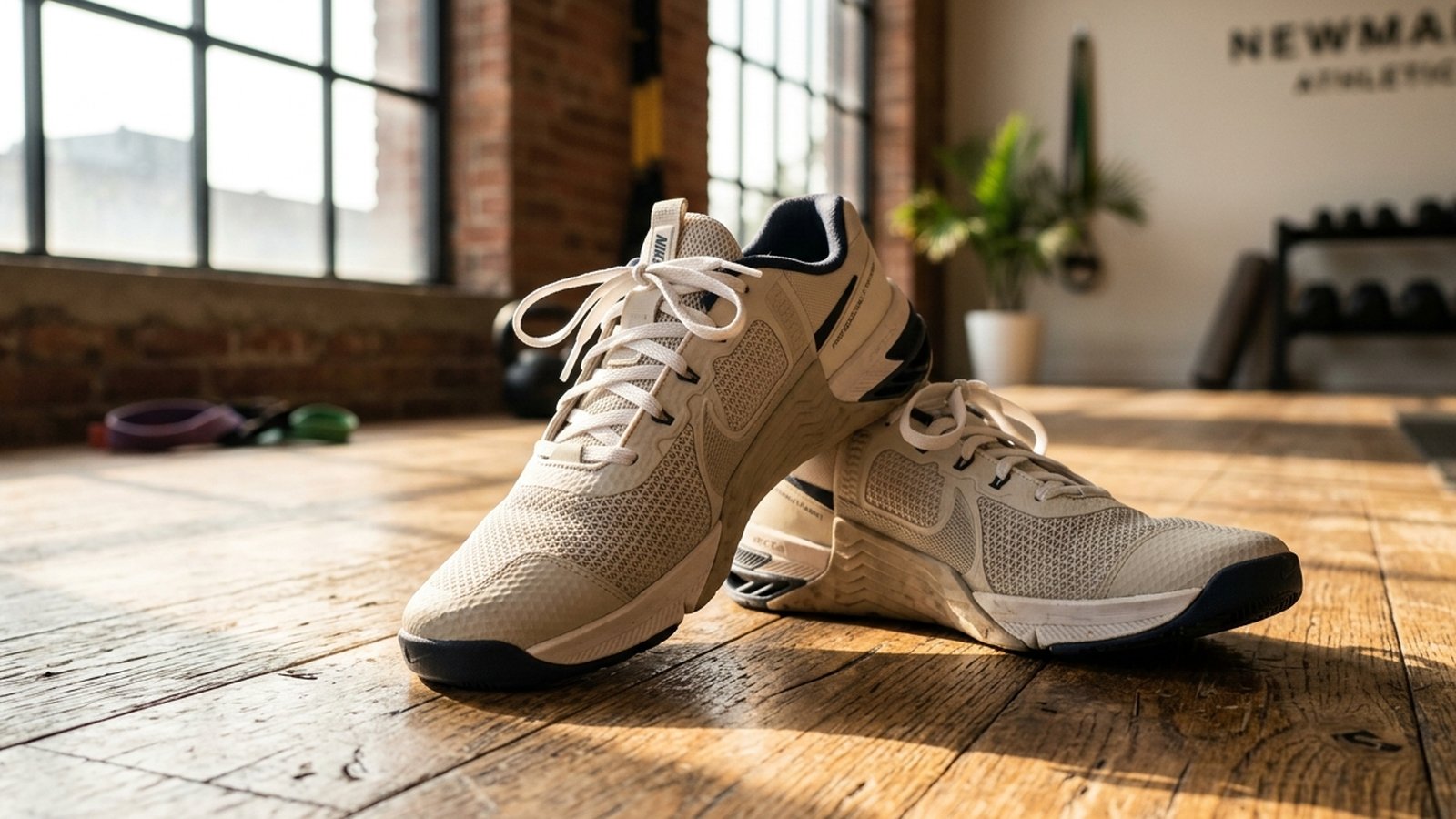
The lift dictates the shoe. Soft cushion compresses under load.
References
- Richards, C. E., Magin, P. J., & Callister, R. (2009). Is your prescription of distance running shoes evidence-based? British Journal of Sports Medicine, 43(3), 159–162. View source →