A 30-study meta-analysis in The Lancet found people who ate the most fibre had a 15–30% lower risk of all-cause mortality, cardiovascular disease, type 2 diabetes, and colorectal cancer compared with those who ate the least.
💡 Why this matters
Most North Americans eat about half the fibre that population studies link to lower disease risk. Hitting 25–38 g/day from real plant foods produces measurable health outcomes.
What fibre actually is
The part of plant foods that human digestive enzymes cannot break down. Not absorbed for energy. Instead it shapes how quickly other nutrients enter the bloodstream, what microbes thrive in your colon, and how much short-chain fatty acid your gut produces. Two main types: soluble (oats, beans, apples) and insoluble (whole grains, leafy greens, nuts).
The Lancet meta-analysis
Reynolds et al. (2019) systematically reviewed 185 prospective studies and 58 RCTs covering nearly 135 million person-years. People in the highest quintile of fibre intake had 15–30% lower risk of all-cause mortality, CVD, type 2 diabetes, and colorectal cancer (Reynolds et al., 2019). The dose-response continued well past current population averages.
How much, from where
IOM Adequate Intake: 25 g/day for adult women, 38 g/day for adult men. Average North American: ~15 g. Real-food sources per serving: 1 cup cooked black beans (15 g), 1 medium avocado (10 g), 1 cup raspberries (8 g), 1 cup oatmeal (4 g), 1 medium apple with skin (4 g), 1 oz almonds (3.5 g), 1 slice dense whole-grain bread (3 g).
Why supplements are not equivalent
Isolated fibre supplements have a place but the population studies that linked fibre to disease outcomes were measuring fibre from food, which arrives bundled with hundreds of plant compounds. The whole-food package matters.
How to add fibre without bloating
Increase by ~5 g/week, drink more water, and discomfort largely passes within 2–3 weeks as the gut microbiome adapts. Add beans or lentils to one meal daily. Switch white rice to brown. Eat fruit with skin on. Snack on nuts and seeds. Treat vegetables as half the plate.
Findings suggest a 15–30% decrease in all-cause and cardiovascular mortality, and incidence of coronary heart disease, type 2 diabetes, and colorectal cancer, when comparing the highest dietary fibre consumers with the lowest.Source: Reynolds et al. (2019), The Lancet.
By the numbers
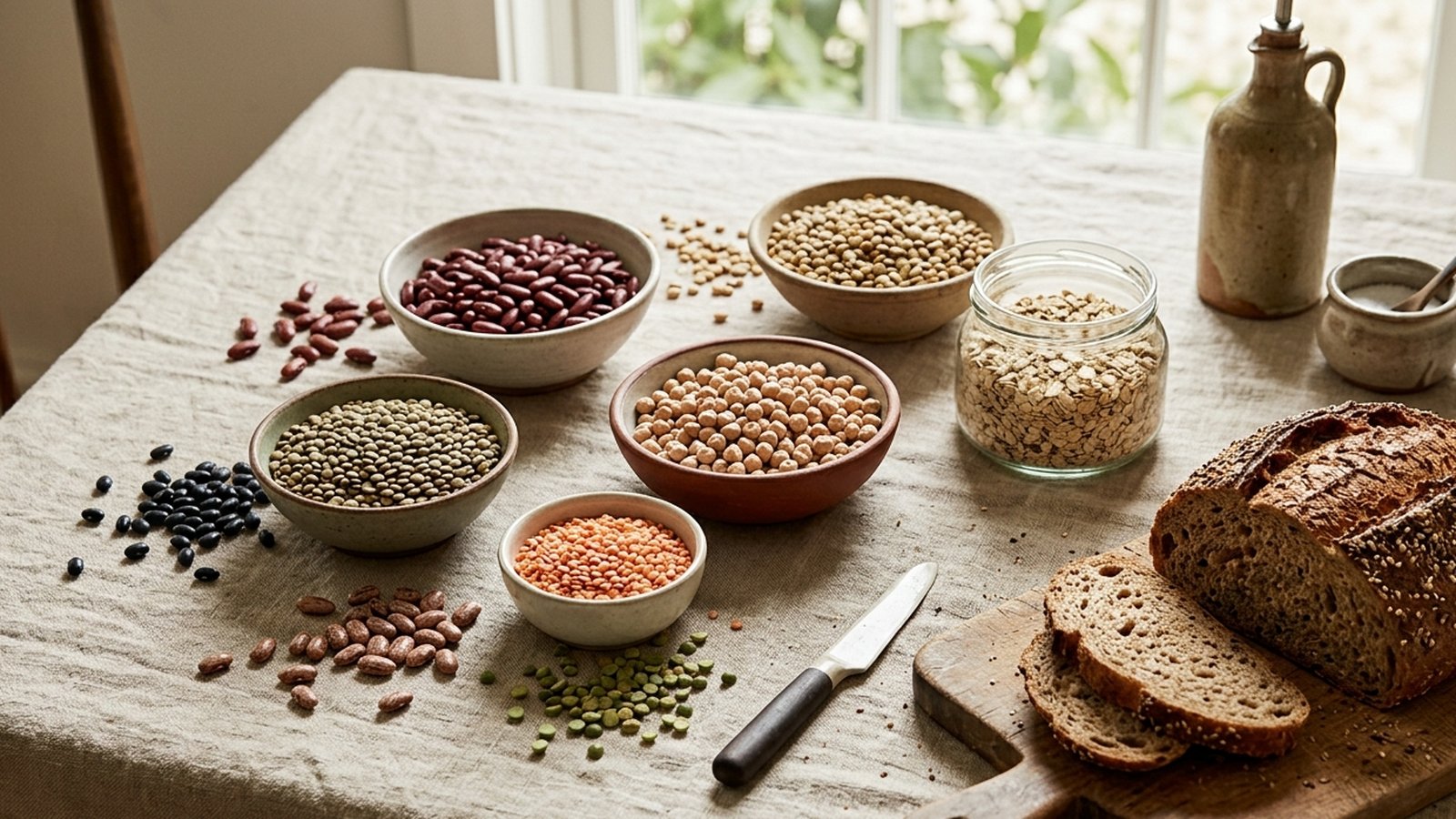
Beans and lentils are the highest-leverage fibre source on the planet.
References
- Reynolds, A., Mann, J., Cummings, J., Winter, N., Mete, E., & Te Morenga, L. (2019). Carbohydrate quality and human health. The Lancet, 393(10170), 434–445. View source →
- Institute of Medicine. (2005). Dietary Reference Intakes for Energy, Carbohydrate, Fiber, Fat, Fatty Acids, Cholesterol, Protein, and Amino Acids. View source →